
A laser can cut dozens of holes in a sheet while cutting the part’s outside profile. For many jobs, those holes are ready to use as soon as the part leaves the cutting table.
Other holes need more attention.
A bearing may need to be pressed into place. A locating pin may depend on a very specific diameter. A bolt hole may be positioned correctly but still need a cleaner internal surface for the way the finished assembly works.
This is where part design and fabrication planning need to meet.
Laser cutting can handle much of the hole-making work,
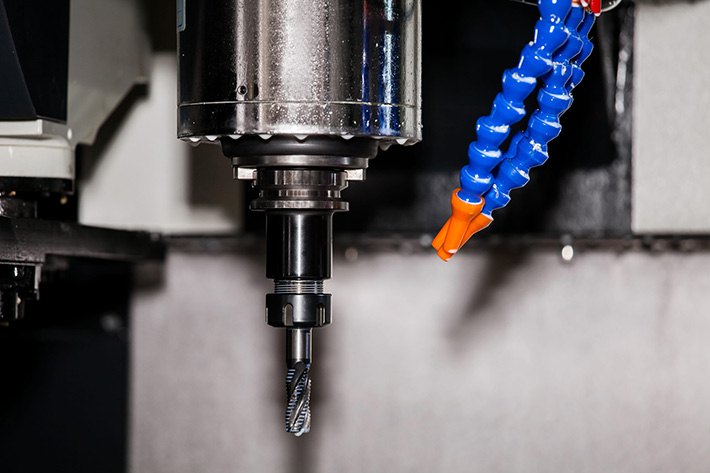
but sometimes drilling, reaming, or CNC machining provides the final level of control the feature requires.
Start With What The Hole Has To Do
Not every hole on a metal part has the same job.
Some holes simply provide clearance for a bolt. If the fastener passes through easily and the surrounding geometry is accurate, a laser-cut hole may be exactly what the part needs.
A locating hole is different. If a pin uses that hole to position two components, diameter and location matter much more. The same applies when a bearing or precision insert must fit into the opening.
Before choosing a process, ask what happens after the hole is made. That usually tells the fabricator how closely it needs to control the final size.
Material Thickness Changes Hole Quality
Laser-cut holes become more challenging as material gets thicker, especially when the requested diameter becomes small compared with the plate thickness.
The laser beam enters from the top and cuts through the material. On thicker sections, the hole may show a slight difference between the upper opening and the lower edge. The amount depends on the material and cutting conditions.
For an ordinary clearance hole, that may have no effect on the finished assembly. For a precision feature, even a small amount of taper can matter.
Designers sometimes focus only on the diameter shown in the CAD file. The fabricator also has to think about how that diameter will look through the entire thickness of the material.
Tight Fits Often Need Secondary Machining
A laser can create the starting feature quickly, then machining can bring it to the final dimension.
For example, a part may be laser-cut with a slightly undersized hole. After the blank is complete, you can drill or ream the hole to the required size. CNC machining may be used when you need tighter control over location and finished diameter.
This approach can be more efficient than machining the entire part from solid stock. The laser removes most of the material quickly. Machining is reserved for the areas that need tighter tolerances.
That combination is especially useful on fabricated components where most dimensions suit laser cutting but a few features need additional precision.
Surface Finish Can Matter As Much As Diameter
A hole can measure close to the specified size and still be wrong for the application.
A precision pin or bearing may depend on the inside surface quality. The cut edge left by a thermal process differs from a drilled or reamed surface. If the mating component needs smooth, predictable contact, secondary machining may be the better choice.
That is why drawings should clearly identify functional requirements. If the designer only provides a nominal hole diameter, the shop may reasonably treat it as a standard cut feature. If the hole controls alignment or receives a press-fit component, the print should show that information.
The fabrication plan can then account for it before production begins.
Do Not Apply Tight Tolerances Everywhere
It is tempting to place tight tolerances on every hole because greater precision sounds better.
That can increase cost without improving the part.
A mounting bracket may have several ordinary clearance holes and one locating feature that truly needs close control. Treating every opening like the locating hole adds unnecessary work. The better approach is to identify which dimensions affect function and allow practical tolerances everywhere else.
That gives the fabricator room to use the fastest suitable process while spending machining time where it creates real value.
Planning The Sequence Matters
When laser cutting and machining are both required, consider the order of operations early.
If the part will also be formed, the shop may need to decide whether to finish a precision hole before or after bending. Forming can slightly change the relationship between nearby features, especially when the hole sits close to a bend.
The same consideration applies to welded assemblies. Heat and fit-up can affect dimensions, so some finishing operations may make more sense later in the process.
A fabrication drawing that identifies the critical feature helps the shop build the sequence around the finished requirement rather than treating every operation separately.
Precision Laser Cutting & CNC Machining Services in Chesterfield
Laser cutting efficiently creates profiles and a wide range of holes in a single operation. CNC machining provides another level of control when certain features demand it.
The best fabrication plan does not force one process to handle every requirement. It uses the laser for what it does best, then brings in machining where the finished part needs tighter control.
Prototech Laser provides laser cutting, CNC machining, metal forming, welding, and assembly services for customers that need parts to move efficiently from flat material to finished components. Our team can review drawings, identify features that may benefit from secondary machining, and help plan a fabrication process that keeps precision where the design actually needs it.
Contact Prototech Laser today to discuss your requirements and request a quote.