
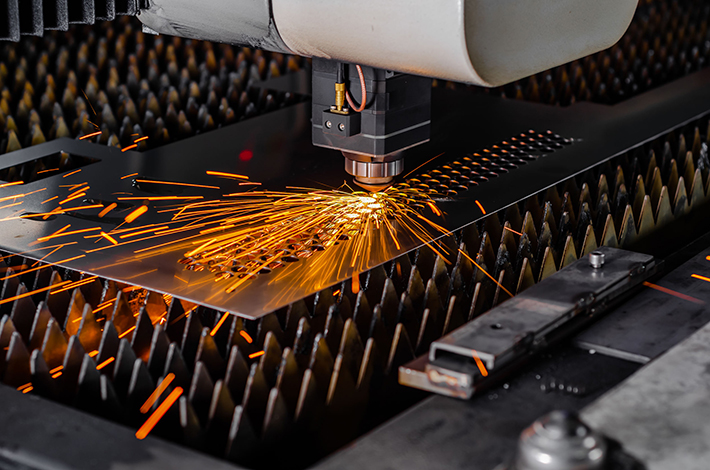
There are many methods for cutting sheet metal. Whether you need metal fabrication for a single custom part, a small order, or a full-scale industrial process, it’s always valuable to stay informed about your options.
The top reasons to use laser cutting for sheet metal fabrication are laser cutting’s superior precision, efficiency and speed.
Laser cutting is great for complex designs, prototyping, and large industrial orders. Continue reading to learn more about the benefits of laser cutting and how it differs from traditional sheet metal fabrication techniques.
The Advantages of Laser Cutting for Sheet Metal Fabrication
Efficiency
Laser cutting utilizes a high-powered beam of energy which cuts through metal quickly and efficiently using a CNC machine. First, the patterns which the machine will cut are designed by manufacturers on a CAD program. Then, the design is sent to the CNC machine.
The actual cutting process is done automatically, which significantly improves speed and reduces costs like labor time and upkeep on tools and equipment. Some laser cutting systems can even combine multiple designs and patterns into a smaller space to optimize the amount of metal that is used.
Speed
Since it cuts material using thermal energy, laser cutters can move quite quickly and can cut many different angles and patterns without stopping to adjust the sheet metal. Some machines can reach a top cutting speed of 1200 inches per minute, although cutting speed depends on the type of material, the thickness of the metal, and the desired tolerance.
Thermal cutting also means almost no burring. Burring is the extra material that is left behind by a cut and which must be removed later to create a smooth finished edge. The lack of burring around cuts further reduces the time it takes to fabricate parts with laser cutting.
Precision
Since laser cutting is done automatically by a machine, it is more precise than traditional mechanical fabrication methods. The use of automation means that there is no possibility for human error in the cutting process. Laser cutting can produce parts with much tighter tolerances, with modern machines able to reach very precise measurements like .005 or even .002 inches.
The targeted cuts of a laser heat metal with pinpoint accuracy. This means that although laser cut with heat, the heat is concentrated in a very small area and does not spread and warp the metal as it cools.
Lower Cost
Although laser cutting is not the cheapest method available, it is still quite affordable for most sheet metal fabrication. Since large laser cutting systems can be very expensive, manufacturers usually outsource their laser cutting to another company which specializes in this kind of fabrication.
However, if one wished to purchase and operate a laser cutting system in-house there are plenty of economic reasons to do so. Over time, the efficiency and reliability of laser cutting make up for the expensive initial investment.
How is Laser Cutting Different from Traditional Sheet Metal Cutting Methods?
Traditional methods for cutting sheet metal include mechanical shearing and die cutting or punching. Traditional methods are slow and require manual operation and machines with many moving mechanical parts.
In contrast, laser cutting is automated and can move quicker than physical blades or punches. CNC machines can also change the path of the laser to produce a new design much faster than systems that use a physical die to punch into the metal.
Summary
In conclusion, laser cutting is faster, more accurate and more efficient than traditional methods for cutting sheet metal. Laser cutting can also have a lower cost than other methods for metal fabrication.
Prototech Laser in Chesterfield specializes in leading edge laser cutting and metal fabrication services. Our dedicated and experienced team is centered on providing innovative fabrication solutions to a wide range of markets including military and defense, automotive and industrial sectors. Call and speak to an associate about how our laser cutting and metal fabrication services can benefit you manufacturing needs.