
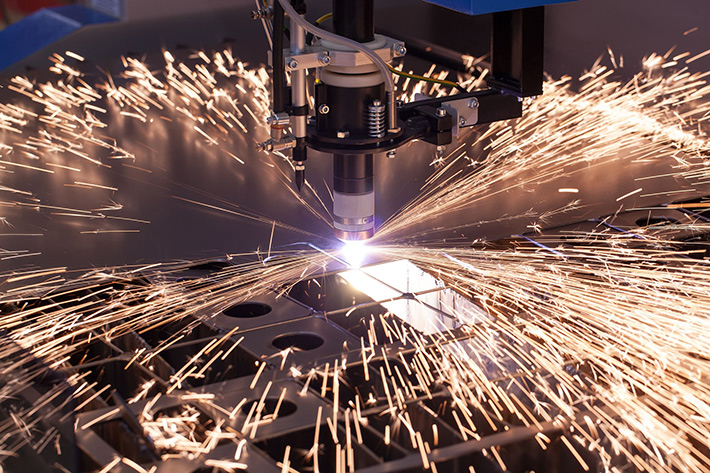
Walk through any metal fabrication shop, and you will hear the same quiet complaint: material is expensive, and it is getting harder to predict. When quotes feel tight and lead times matter, one of the biggest levers is not a new machine or a new alloy. It is the layout of parts on a sheet. That process is called nesting, and it affects far more than scrap.
A good nest shortens cut time, reduces handling, and keeps downstream operations moving. A bad one can burn hours in small, avoidable ways.
Laser nesting and material yield: how part layout drives lead time and cost
Nesting is the plan for how parts are arranged on a sheet or plate before the laser ever fires. The obvious goal is yield, which is how much of the sheet becomes sellable parts instead of scrap skeleton. Better yield usually means fewer sheets to buy, store, move, and cut.
But yield is only the first layer. Layout decisions also change cycle time and shop flow. The same set of parts can run fast or slow depending on where they sit, how they are oriented, and how the toolpath is built.
Yield is based on math, But Completed In Judgment
On paper, maximizing yield sounds simple: pack parts tightly and use the fewest sheets. In practice, the tightest packing is not always the best job plan.
Certain layouts create extra heat in one area, which can warp parts or cause small features to pull. Some parts require grain-direction control for bending, cosmetic finish, or strength. Some need to stay stable so they do not tip into the cut path. A nest that is “perfect” in software can still be a headache to run on the floor.
So nesting becomes a balance between material utilization, part quality, and cut efficiency.
How nesting affects cost beyond scrap
Material yield changes the direct material cost, and that part is easy to see. Save a sheet on a run, and the savings are immediate.
The less obvious costs often add up faster:
● Laser time: Long travel moves, excessive repositioning, and extra pierces all stretch cycle time.
● Consumables: More pierces and longer cut length can increase nozzle wear and gas use.
● Handling: More sheets mean more loading and unloading, more sorting, and a greater risk of mixing parts or missing counts.
● Downstream flow: If parts come off in a tangled skeleton, braking, welding, and assembly lose time.
A smart nest reduces total “touch time.” That shows up in quotes, and it shows up again when jobs stay on schedule.
Toolpath And Pierce Count Matter
Two layouts can have similar yield and very different run times. The reason is often the toolpath. If the laser is constantly jumping across the sheet, you pay for motion that is not producing parts. If the nest creates many small segments and holes, pierce time can become a larger slice of the cycle than people expect.
Heat management also lives here. A cut sequence that repeatedly returns to the same area can build heat, increasing the risk of distortion. Distortion leads to straightening, extra deburring, or scrap. Those are real costs, even if the yield looked great.
When perfect yield is not the goal
There are runs where a slightly lower yield is the smarter choice. If a tighter nest increases the risk of heat distortion, it may create more scrap than it saves. If parts must stay oriented for forming, rotating for yield can cause downstream problems. If lead time is critical, a simple, reliable nest that unloads cleanly can beat a complex nest that is finicky.
Expert Metal Fabrication Built Around Your Priorities
The best nesting strategy fits the job, not the spreadsheet. At Prototech Laser in Chesterfield, the team can review your files, build nesting and cutting strategies around your priorities, and quote fabrication with an eye toward both material yield and actual runtime.
If you want a faster quote or a second opinion on how nesting is affecting your cost and lead time, reach out and share your drawings and requirements. Our advanced laser cutting and metal fabrication services are designed to reduce waste, shorten lead times, and deliver precise, repeatable results you can count on.