
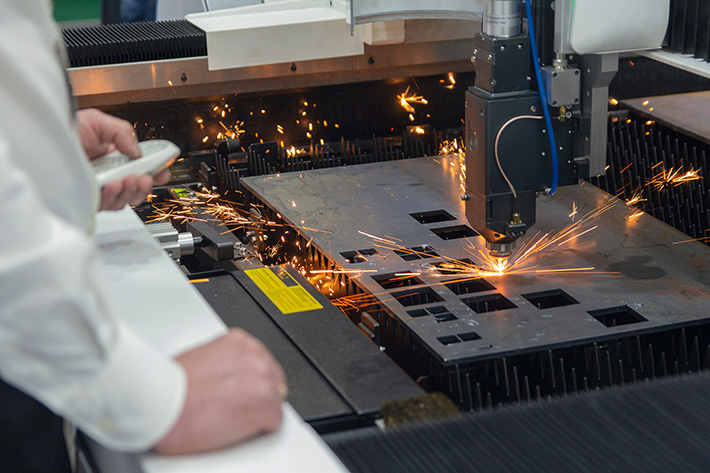
Laser cutting has become a go-to method in modern metal fabrication thanks to its precision, speed, and versatility. But not all jobs are created equal—and one of the most important factors in determining how a part is cut is the thickness of the material.
Whether you’re working with thin-gauge stainless steel or half-inch plate, material thickness plays a major role in everything from cut edge quality to how quickly a job moves through production.
Prototech Laser brings decades of custom metal-fabrication expertise, delivering production-ready scale and exacting precision.
The Basics: What Happens When a Laser Hits Metal
At its core, laser cutting works by focusing a high-powered beam of light onto a specific spot on the material. That beam heats, melts, and vaporizes the material in a controlled line or path, guided by CNC software.
Thinner metals generally melt and vaporize more quickly, meaning the laser can move faster across the surface. Thicker metals take more time and power to cut through, and the laser must slow down to maintain a clean, precise edge.
As simple as that may sound, the real-world differences in performance between thin and thick material are substantial.
Cutting Thin Sheet Metal: Fast and Precise
When working with sheet metal—typically 1/16″ (1.5mm) or thinner—laser cutting machines can operate at high speeds while still producing incredibly fine detail. Here’s what to expect:
● Higher cutting speeds: Thin material allows the laser to move faster without compromising cut quality.
● Tighter tolerances: Less heat buildup reduces distortion, allowing for high-precision cuts, even on intricate patterns.
● Smooth edges: With proper settings, edges come out clean with minimal dross (residue), especially in aluminum and stainless steel.
● Less kerf (cut width): The beam can focus more sharply, leading to narrower cuts and tighter nesting of parts.
Thin-gauge materials are ideal for applications requiring detailed cutouts, tight-fitting parts, or fine contours—such as enclosures, signage, or electronics components.
Cutting Thicker Material: Slower but Still Precise
Thicker materials come with a different set of challenges. While laser cutting is still incredibly accurate there are new concerns:
● Slower cutting speeds: More energy is needed to penetrate the material. This naturally slows down the cutting process.
● Increased heat-affected zone: Thicker material absorbs heat more efficiently than thinner spaces. This can lead to slight warping or discoloration near the cut.
● Edge tapering: The beam may widen slightly as it moves through the material, creating a small taper from top to bottom.
● More dross cleanup: Particularly in mild steel, thicker cuts may produce more molten slag on the bottom edge that requires secondary processing.
Despite these factors, high-power lasers and expert technicians can still produce precise, consistent results on thicker plates—especially when paired with oxygen or nitrogen assist gases and correct machine parameters.
How Thickness Affects Tolerances and Design
Material thickness doesn’t just influence speed—it also affects how tight your tolerances can be and how detailed your design can get. Here’s how:
Tolerances
● On thinner materials, tolerances as tight as ±0.005″ are achievable.
● For thicker materials, expect looser tolerances—typically around ±0.01″ to ±0.02″, depending on material type and machine settings.
Detail and Feature Size
● Very fine features (like tiny holes or narrow slots) are easier to achieve in thin sheet metal.
● On thicker plates, small features may require larger minimum sizes to prevent distortion or blowout during cutting.
Kerf Width
● The width of the cut (kerf) widens slightly as thickness increases. This affects how closely you can nest parts on a sheet and how parts will fit together during assembly.
When designing parts, always consult your laser cutting provider about minimum feature sizes. You should also discuss tolerances based on your material thickness.
Best Practices for Working with Varying Thicknesses
Fabricating thin aluminum or thick carbon steel uses these best practices to help keep your project on track:
● Match the material to the application: Don’t overbuild—if strength isn’t a priority, thinner stock can save time and cost.
● Be flexible with tolerances: The tighter your tolerances, the more time and precision are required—especially on thicker metals.
● Communicate up front: Provide your laser cutting partner with detailed drawings, including thickness, material type, and any critical dimensions.
● Ask about edge finishing: If you need clean, dross-free edges (especially on thick parts), ask about secondary finishing options or cutting with nitrogen instead of oxygen.
Rely On the Experts for Laser Cutting
At Prototech Laser in Chesterfield, we’ve worked with everything from razor-thin stainless to thick structural plate. Our team knows how to dial in the right settings for your material and application, ensuring top-tier results on every production job. Contact us to learn how we can bring speed and precision to your next metal fabrication project—no matter the thickness.